
Health care · Nursing
Someone beside you,
every day.
Nursing is what families care about most. The project documents describe daily health monitoring, medication management and emergency support, plus a special care area for higher needs.
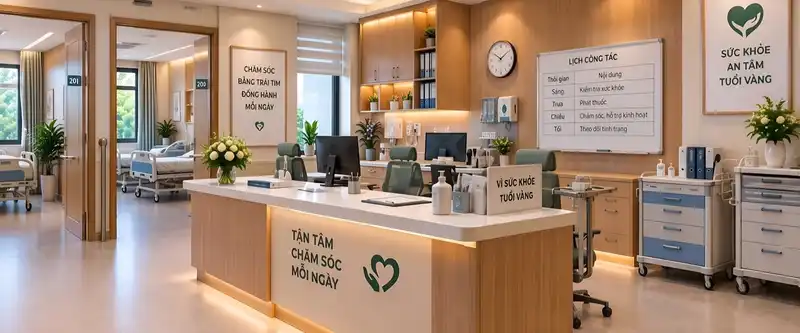
Small, steady care
According to the project documents, the nursing room monitors vital signs daily, manages medication and health records, and works with doctors and specialists when needed.
For needs that call for closer monitoring, the documents include a separate special care area. Each case will be assessed by the responsible organisation.
Design specifications
- 18–25 m²
- Nursing room, 15–20 people per shift
- 2–4
- Nurses per shift
- 24/7
- Emergency response
- 200–300 m²
- Special care area
Special care facilities
The special care area includes dedicated rooms and clinical spaces.
- Single special care room, 28–32 m²
- Double special care room, 40–50 m²
- Continuous monitoring room, 30–40 m²
- Private physiotherapy area, 60–80 m²
- Family and doctor consultation room, 20–30 m²
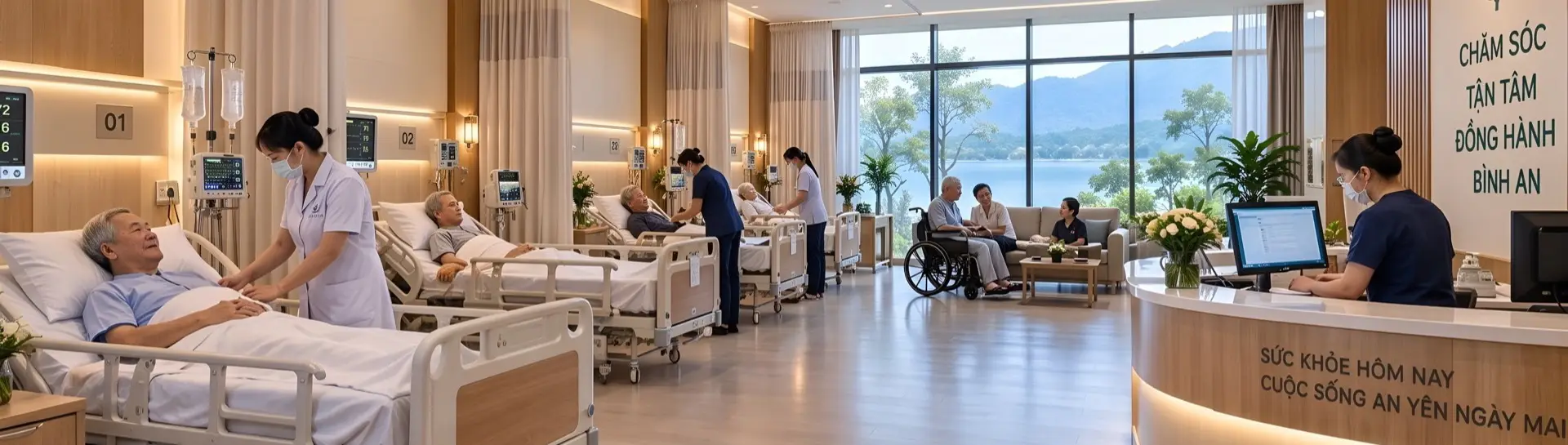
Other paths of care
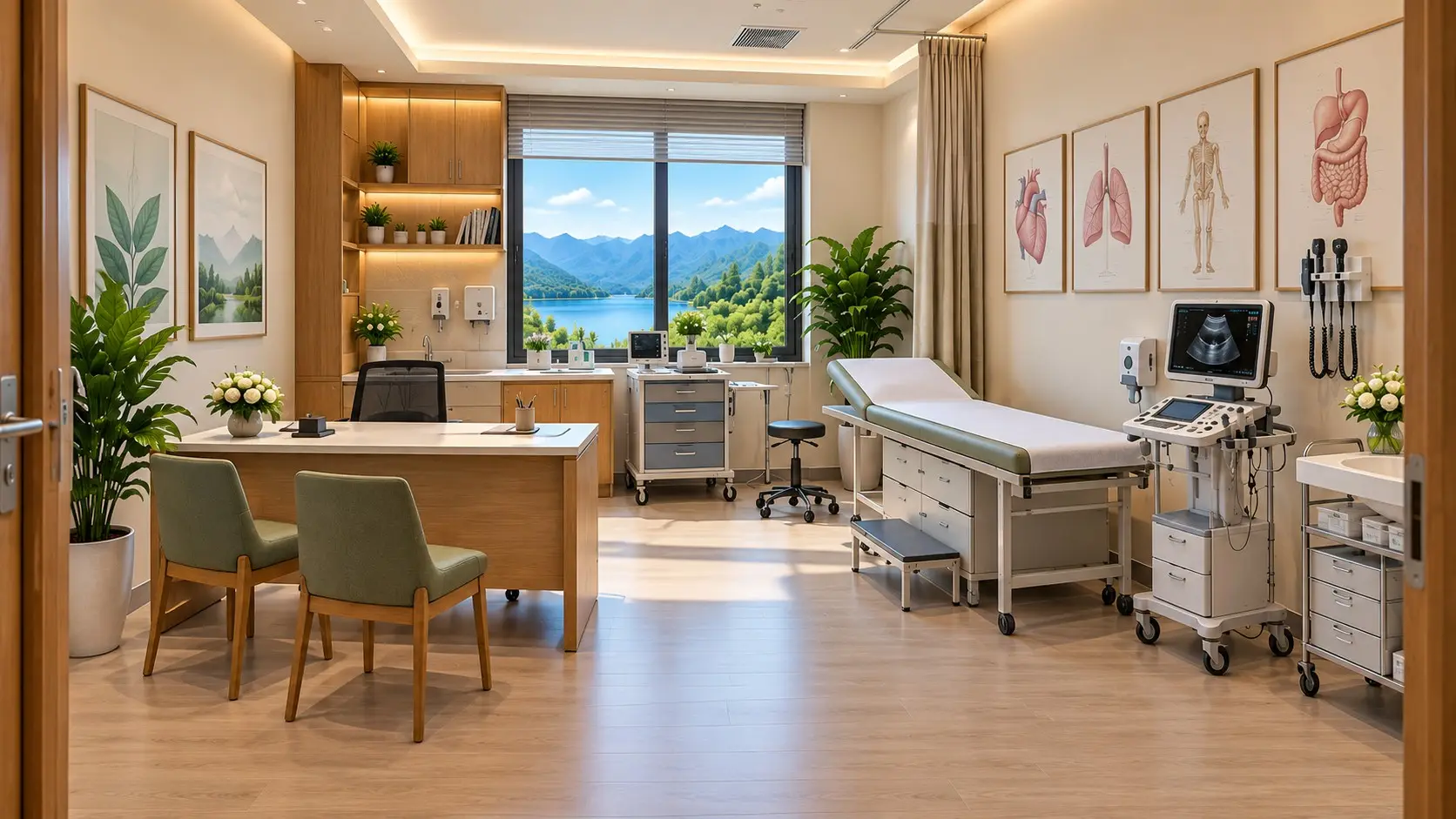 Illustrative concept rendering
Clinic
In the planned design, a dedicated space for health consultations, regular general check-ups and keeping individual health records.
- Clinic 80–120 m²
- Pharmacy
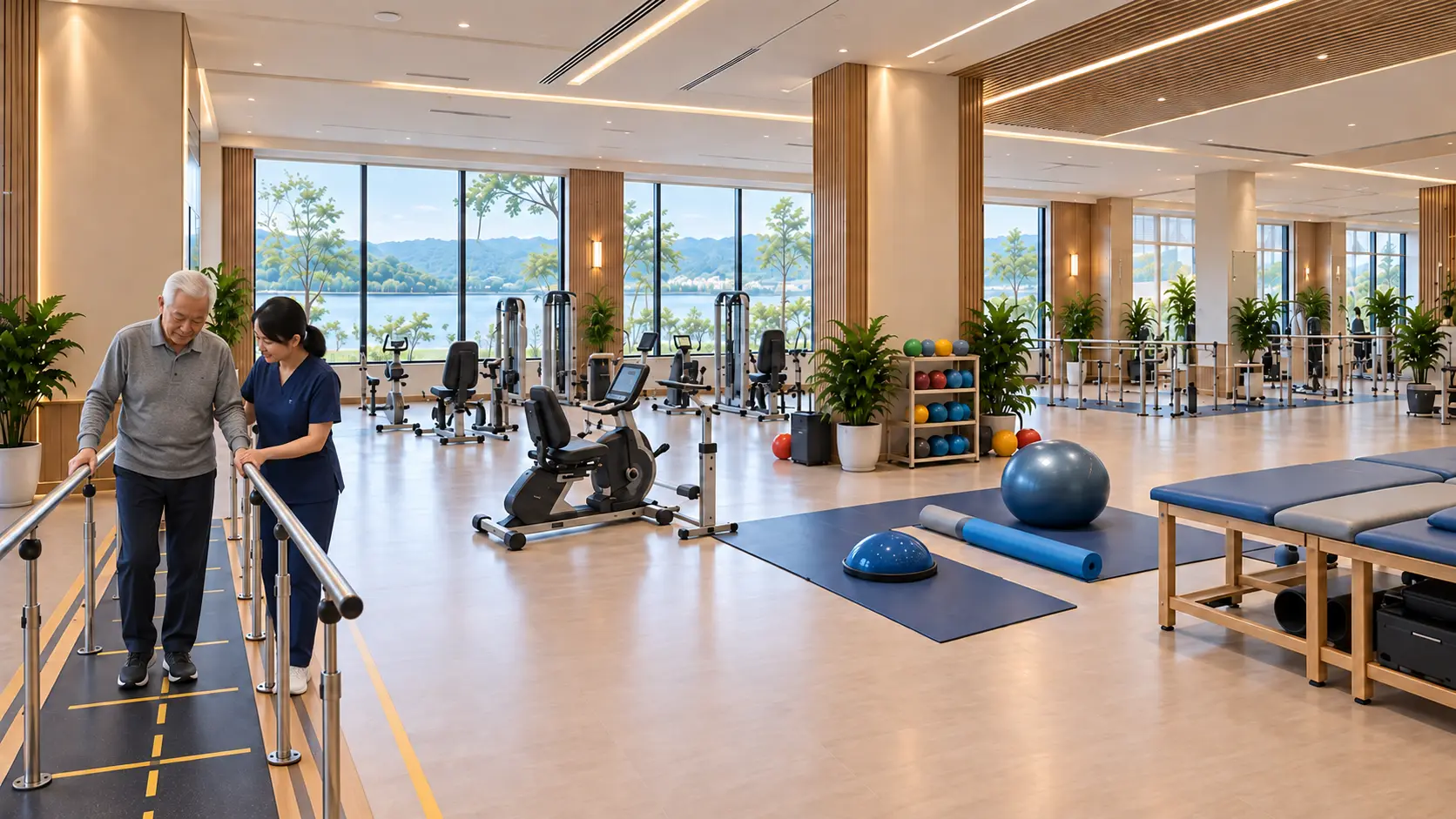 Illustrative concept rendering
Rehabilitation
The planned layout includes a spacious area to practise walking, balance and gentle guided movement.
- 250–350 m²
- 40–60 people per session
See also
- Special care rooms
Explore the 4-bed and 8-bed special care rooms.
- Pricing
See stay package prices, deposits and payment schedules.
Frequently asked questions
What do nurses do each day?
According to the project documents: monitor vital signs daily, manage medication and health records, coordinate with doctors and specialists, and support emergencies. The detailed procedures will be set by the operator.
How many nurses are on each shift?
The documents state 2–4 nurses per shift as design intent. The actual number will be confirmed once the project operates.
Who are the special care rooms for?
For needs that call for more monitoring and help than usual. Please see the Special care rooms page, and discuss your parent’s condition so the responsible organisation can assess it.
Can the family talk to a doctor?
The documents include a private room of 20–30 m² in the special care area where family and doctor can talk, to give a quiet place for the conversation.
The documents also mention medication management, daily vital-sign monitoring and rooms for those needing more care. All of this is design intent, not a commitment about the team or the medical scope. This page describes the concept in the project documents and does not replace medical advice. The scope of services, the team, licences and admission conditions will be confirmed with the responsible organisation. Each person’s health should be discussed directly with the doctor who follows them.